

Handcrafted in Portugal
There are easier places to make a bag.
Factories in Asia can produce at a fraction of the cost. Automated production lines can replicate most stitching patterns. And for many brands, that's the calculation that gets made.
We made a different one.
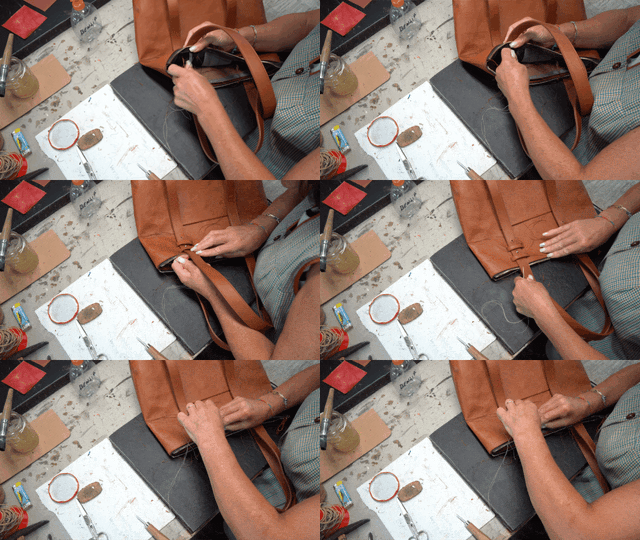
Every Coneli bag is handcrafted in Portugal — by skilled artisans, in small workshops, using techniques refined over generations. It costs more. It takes longer. And it's the reason our bags hold together the way they do.
Portugal: One of Europe's Great Craft Traditions
Portugal has been producing leather goods for centuries. Long before "Made in Portugal" became a mark of quality, Portuguese artisans were developing the technical expertise that still defines the country's manufacturing today — precise cutting, hand-finishing, hardware setting, and stitching that holds under real use.
The country's leather and accessories industry is concentrated primarily in the north — in regions like Braga, Porto, and the Ave Valley — where family-run workshops and specialist manufacturers have operated for decades, passing skills from one generation to the next. This is not mass production. It is a craft tradition, maintained by people who have spent their careers learning to work with materials by hand.
Portugal is today one of the leading exporters of quality leather goods in Europe, supplying workshops and artisans to luxury houses and independent brands across the continent. When you see "Handcrafted in Portugal" on a bag, it carries real meaning.
How a Coneli Bag is Made
Pattern & Cutting
Each bag begins with precise pattern cutting. The plant-based leather panels are cut by hand or with precision tools to exact measurements — no shortcuts that would compromise the final shape or symmetry of the bag.
Edge Finishing
The raw edges of every panel are treated and finished before assembly. This step — often skipped in mass production — determines how a bag holds up over time. Properly finished edges don't fray, crack, or separate.
Stitching
All structural seams are stitched with high-tenacity thread using techniques that distribute tension evenly across the bag. The stitching is checked by hand at each stage. Thread density, stitch length, and tension are set for long-term durability — not just appearance.
Hardware Setting
Buckles, clasps, D-rings, and adjusters are hand-set and tested individually. Hardware failure is one of the most common reasons bags wear out prematurely. Setting it correctly by hand ensures each piece holds through years of daily use.
Quality Control
Every finished bag is inspected before it leaves the workshop — seams, hardware, lining, symmetry, and surface quality are each checked against our standards. Bags that don't pass are reworked, not shipped.
Fair Wages, Always
We work exclusively with workshops that pay their artisans fairly. This is not a certification we hold — it is a condition of every partnership we enter.
The people who make Coneli bags are skilled professionals. They are paid accordingly. We believe that ethical production is inseparable from the quality of the product itself: a bag made under pressure, by underpaid workers, on shortened timelines, simply will not hold together the way a bag made with care and proper time will.
This is part of what you pay for when you buy a Coneli bag. We think it matters — and we think it should be said plainly.
Certified Materials, Transparent Standards
Every material we use is independently certified for its plant-based content. We don't make claims we can't back up.
USDA Certified Biobased — confirms that our materials contain a minimum of 65% plant-derived content, independently verified.
OEKO-TEX Standard 100 — confirms that our materials contain no harmful substances and are safe for skin contact.
FSC Certified — confirms that wood-derived components in our materials come from responsibly managed forests.
These certifications exist so that you don't have to take our word for it.

Why It All Connects
The materials and the craftsmanship are not separate decisions. They're part of the same logic.
Plant-based leathers require skilled handling — they behave differently from conventional leather, and working with them well requires experience and attention. The artisans we partner with in Portugal have that experience. They've adapted their techniques to these newer materials without compromising the quality standards their workshops have maintained for decades.
The result is a bag that carries the integrity of both: innovative materials, made responsibly, by people who know what they're doing.